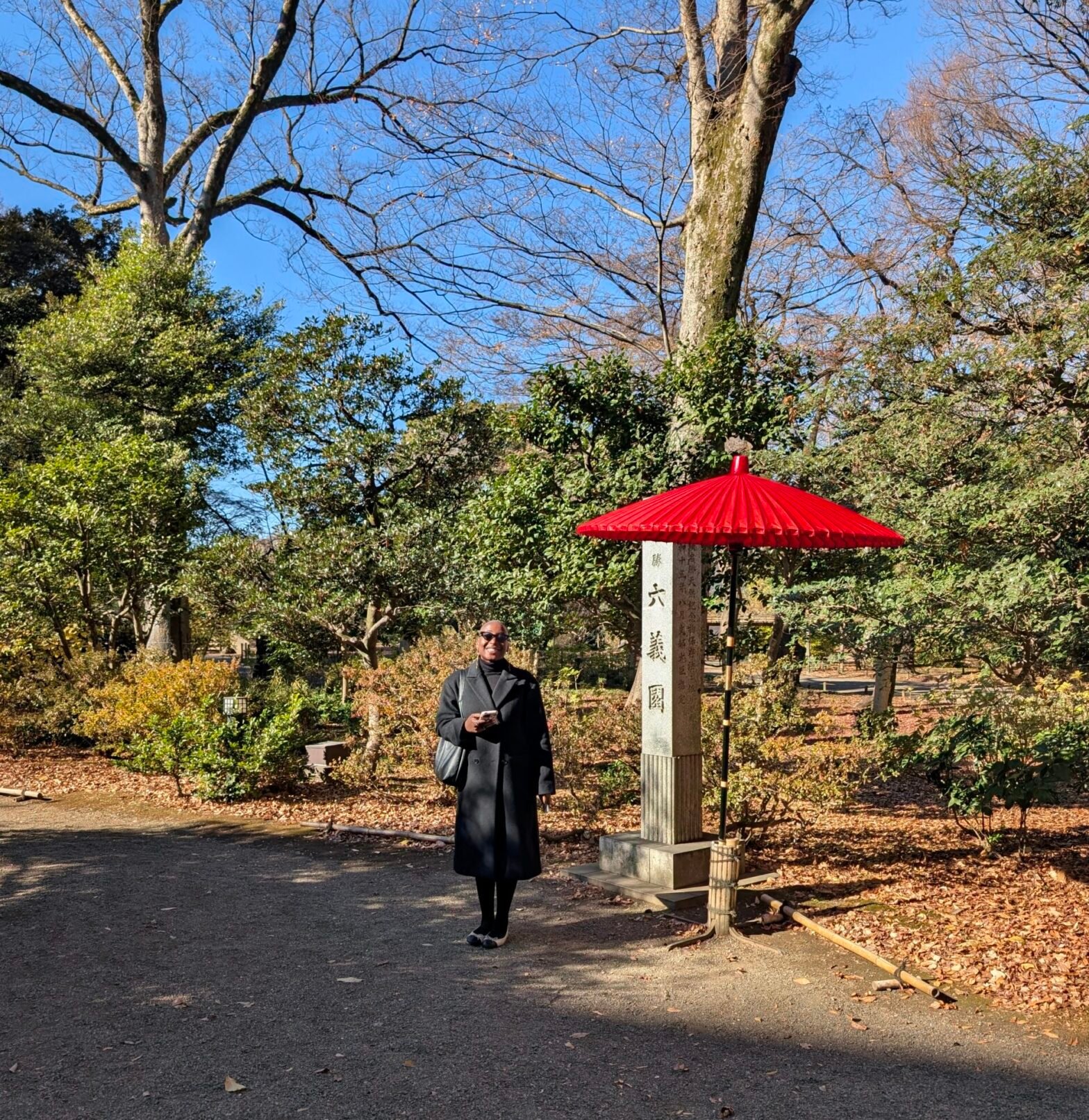
On a week-long visit to Japan, my partner and I travel along the Golden Route, living a small part of our lives in Tokyo, Kyoto, and Osaka.
Tokyo
We’re 17 hours ahead of San Francisco—a mammoth time difference that we feel when we’re bright-eyed at 5 am and heavy-lidded at 4 pm. Each day is like this, so we lean into the routine, building our itinerary around it: we enjoy quiet mornings at our hotel while we wait for places we want to visit to open, spend the late morning and afternoon sightseeing, nap in the early evening, and then go out to dinner before losing the fight to sleep. Barely a day into the trip, I already know the week will feel short. Exciting, adventurous, but short all the same.
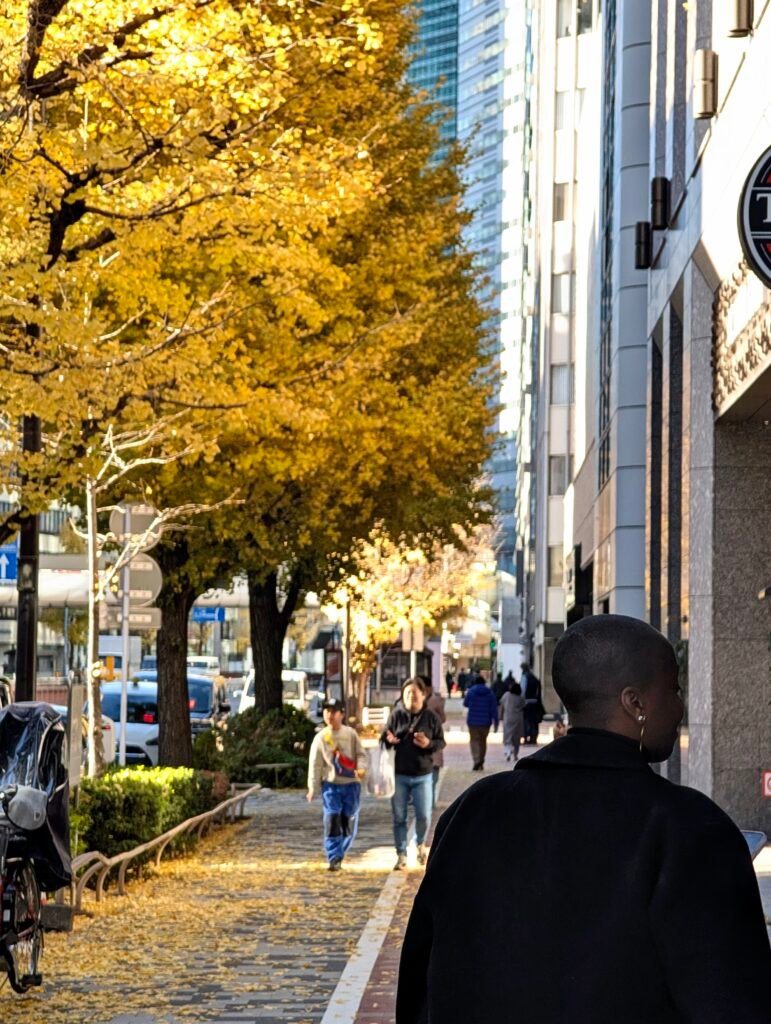
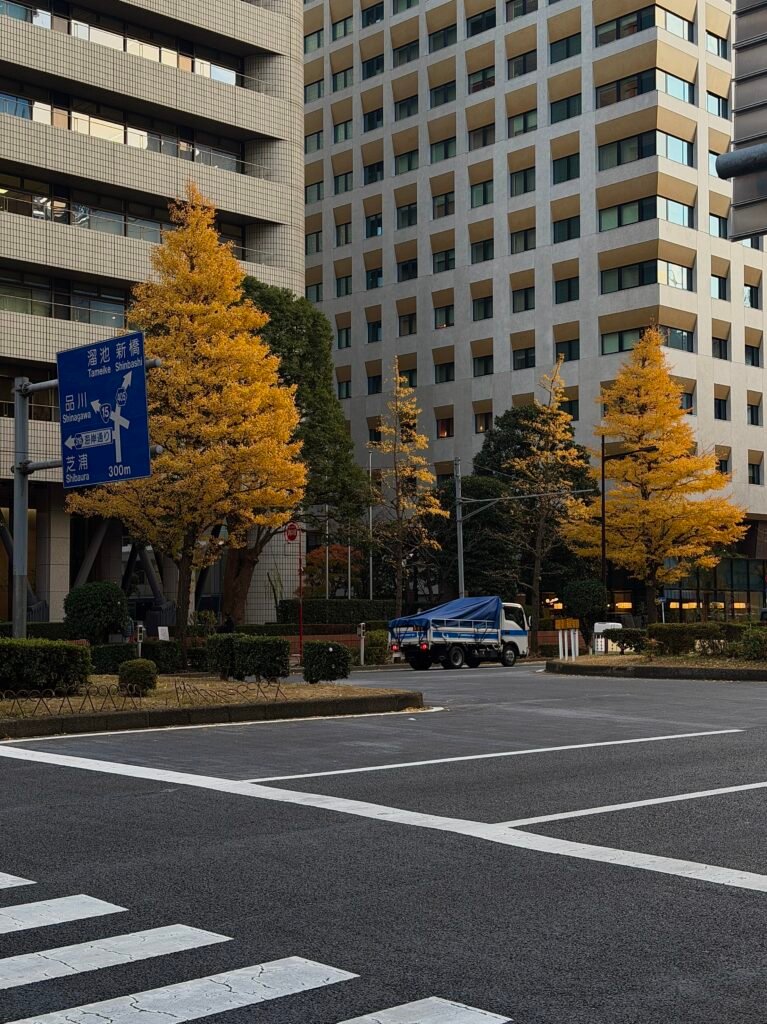
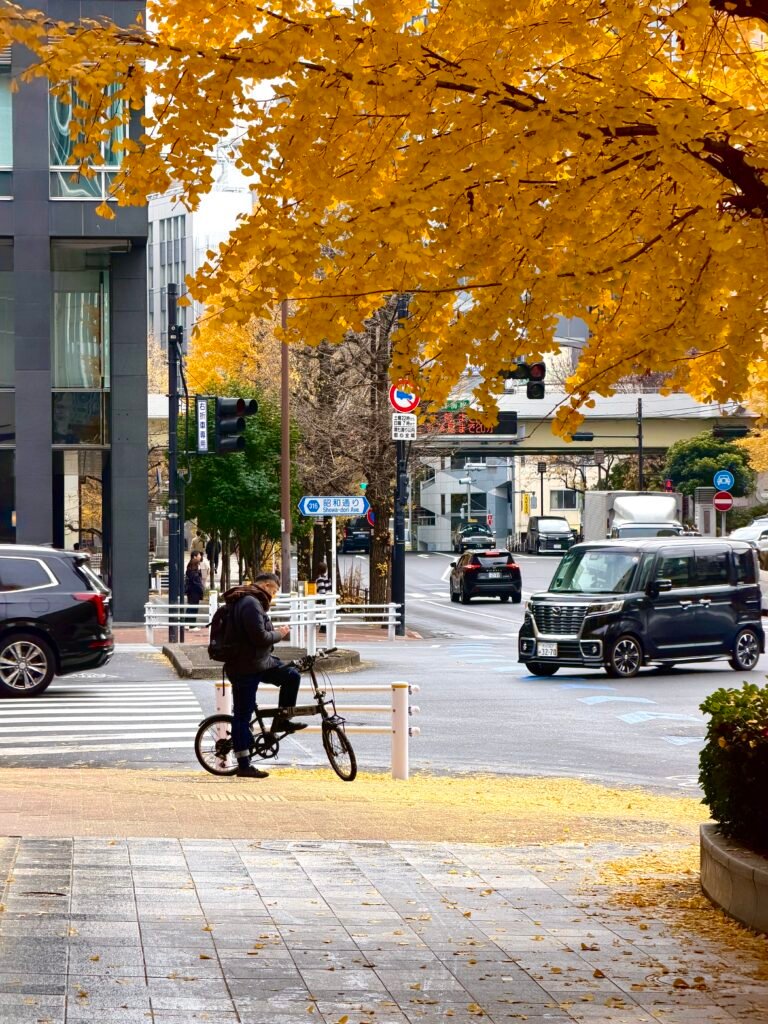
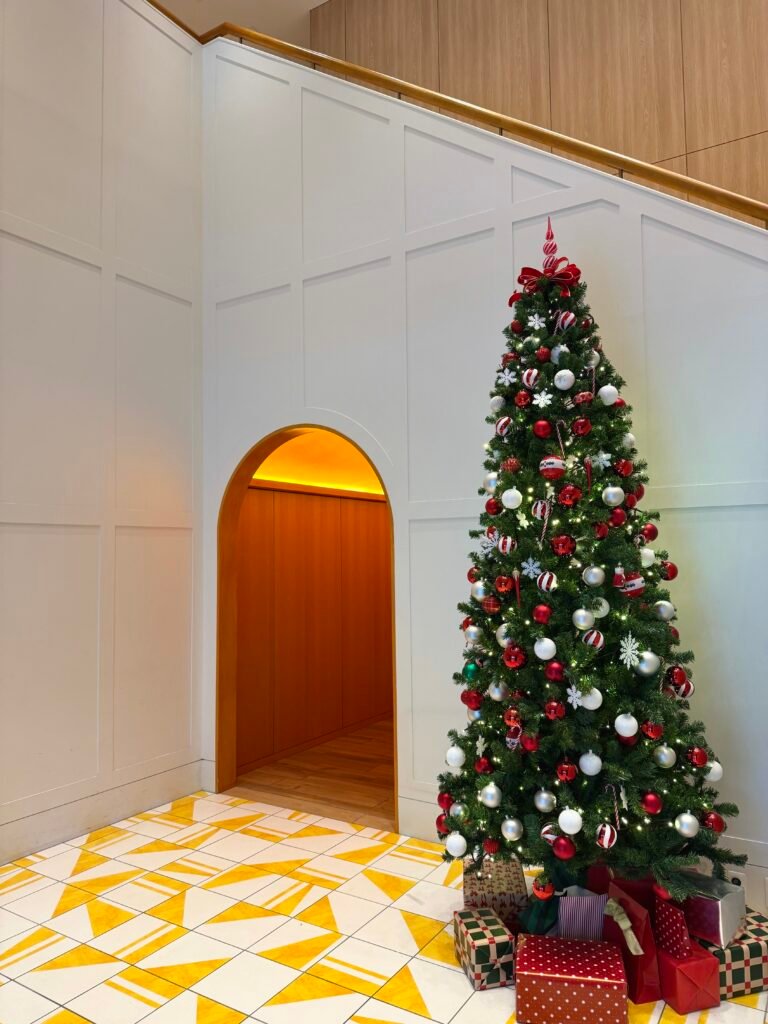
These are some memorable moments from our time in Tokyo.
Rikugien Gardens
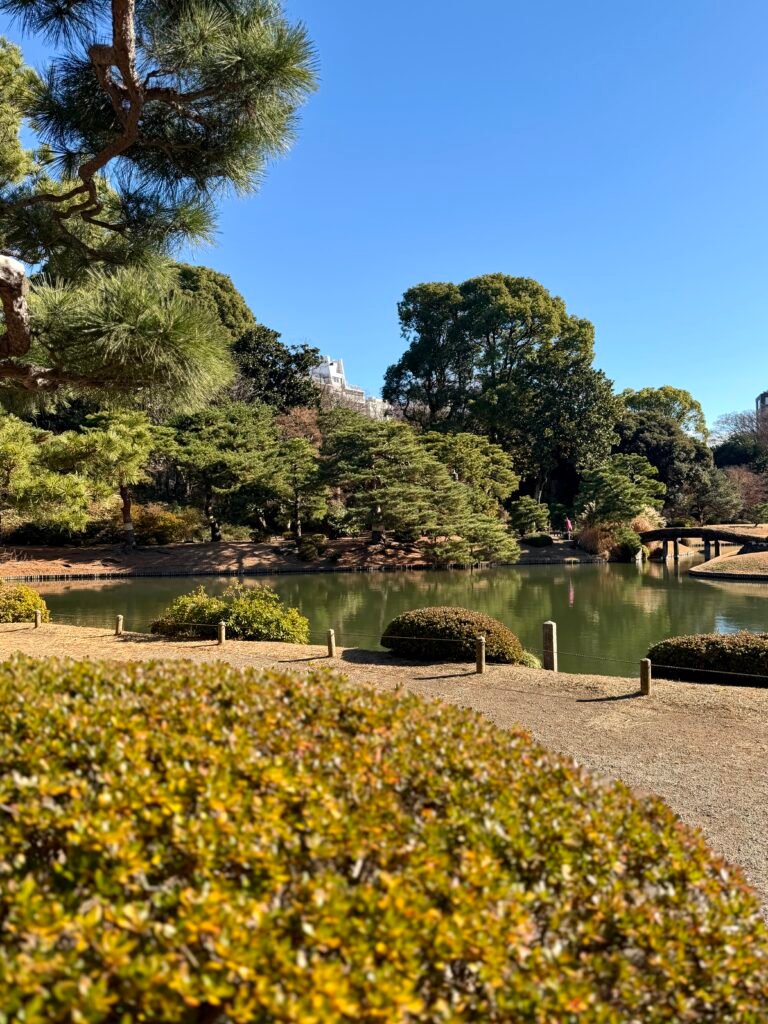
Inside Rikugien’s well-kept gardens, city sounds fade enough to hear nature speak: in the rustle of leaves, birdsong, a rippling pond, and in the whispers of sand moving beneath my feet. The landscape, inspired by Japanese poetry, brings written scenes to life in deep greens, reds, and yellows; each view is a perfect composition.
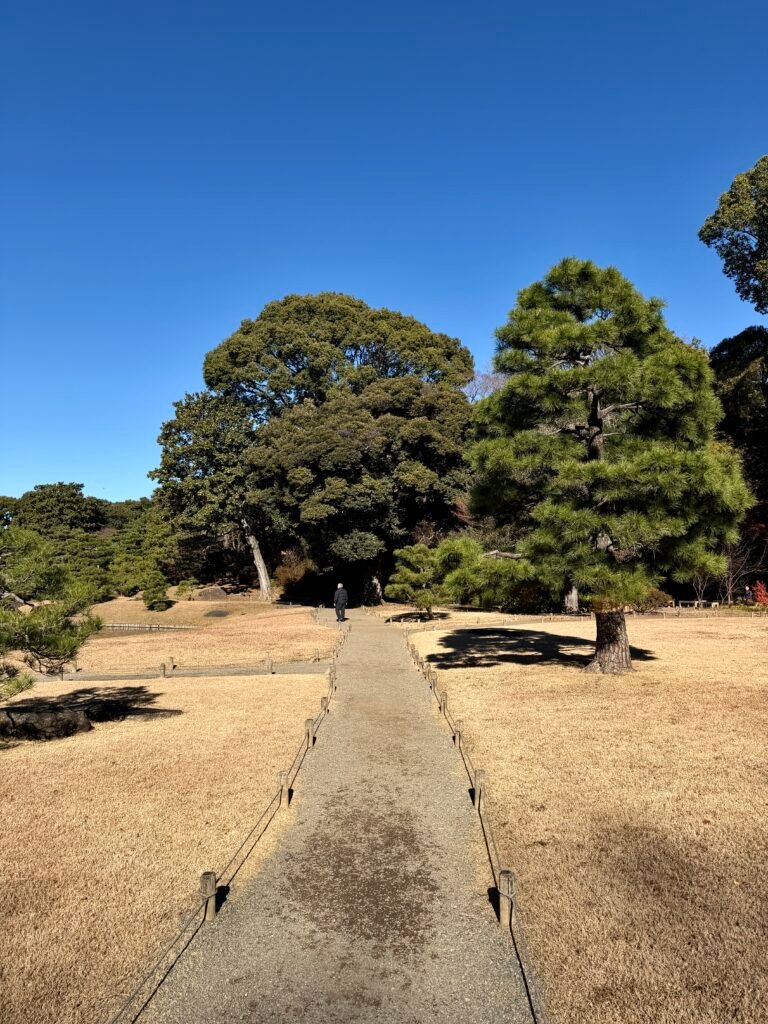
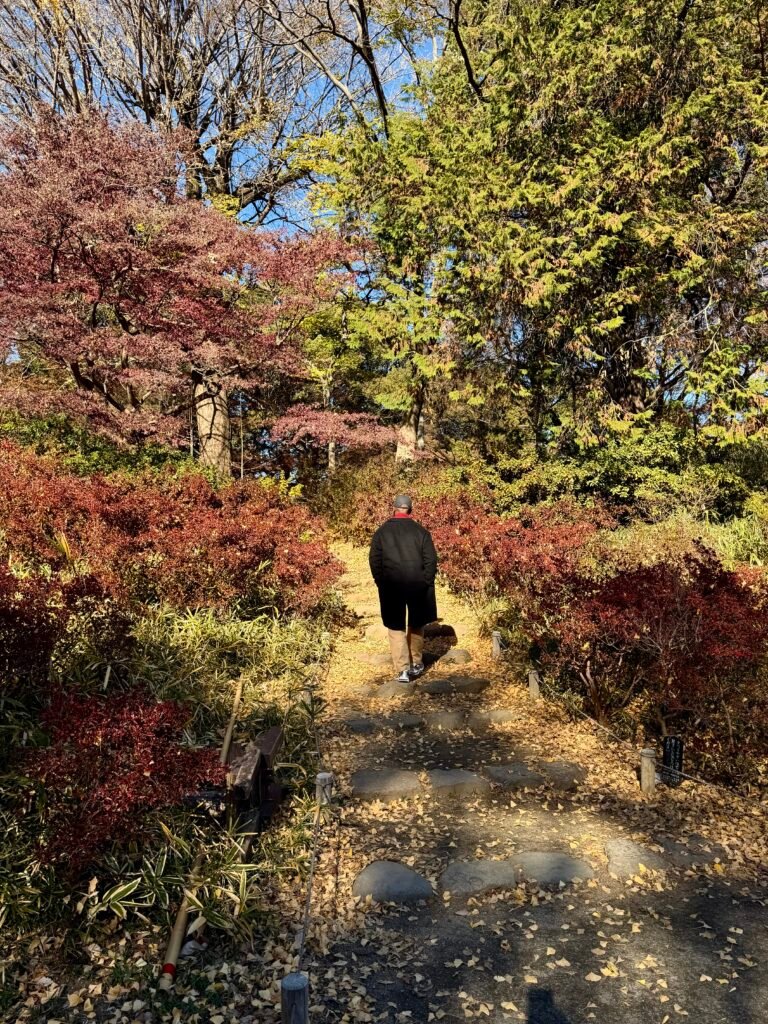
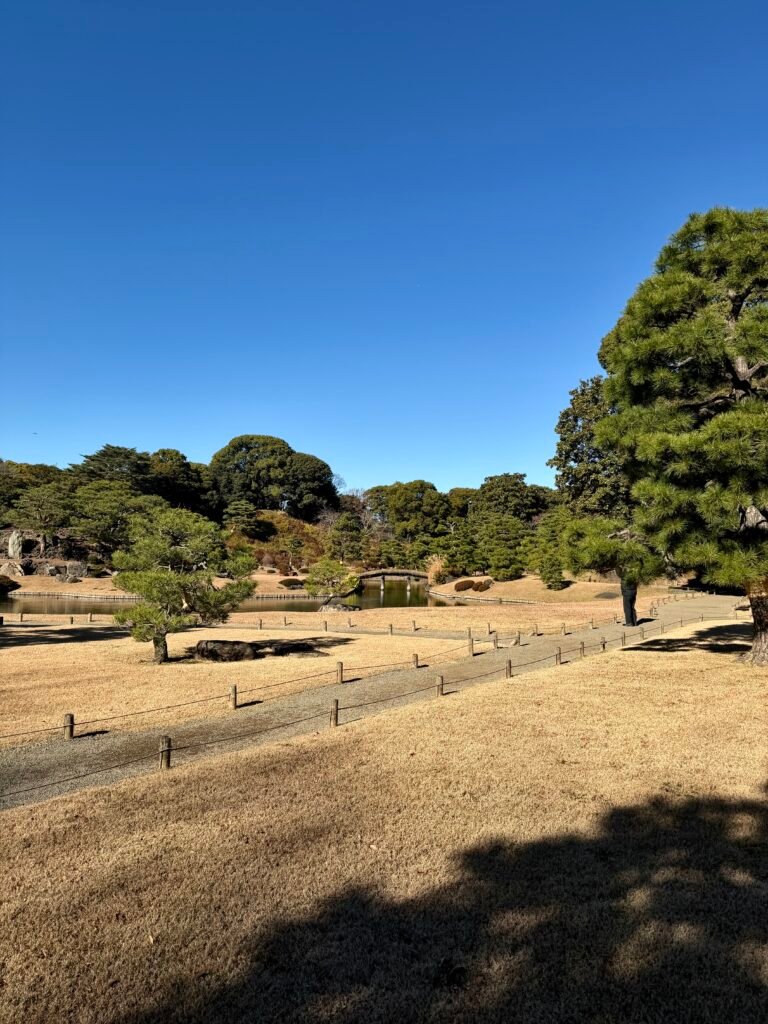
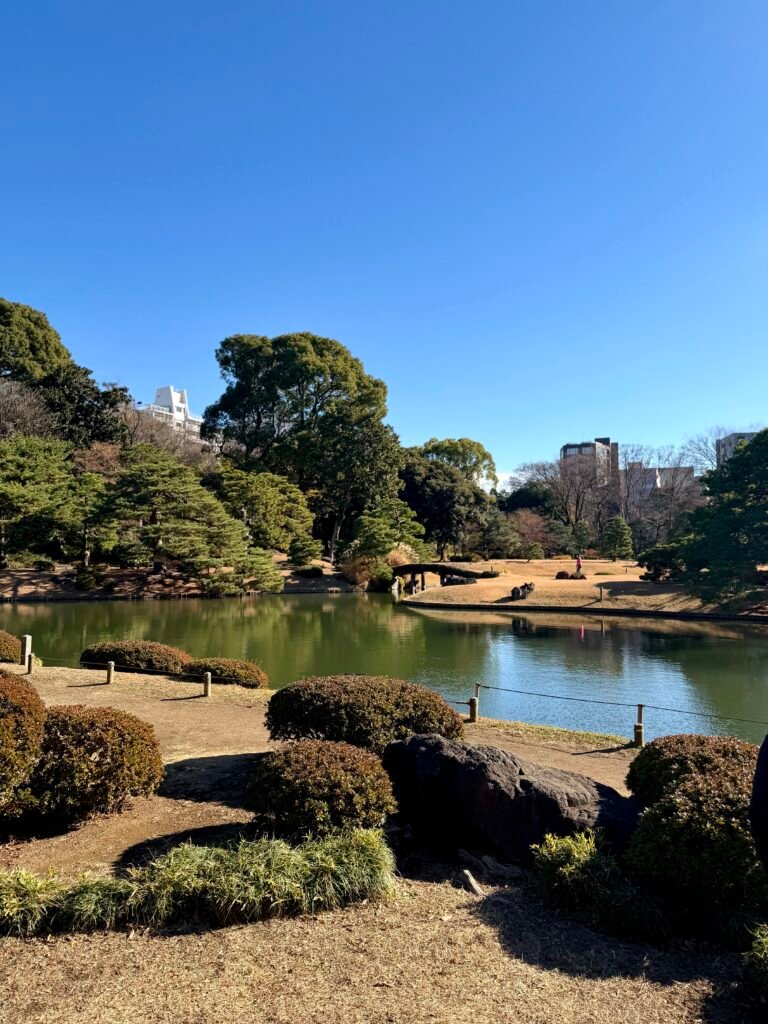
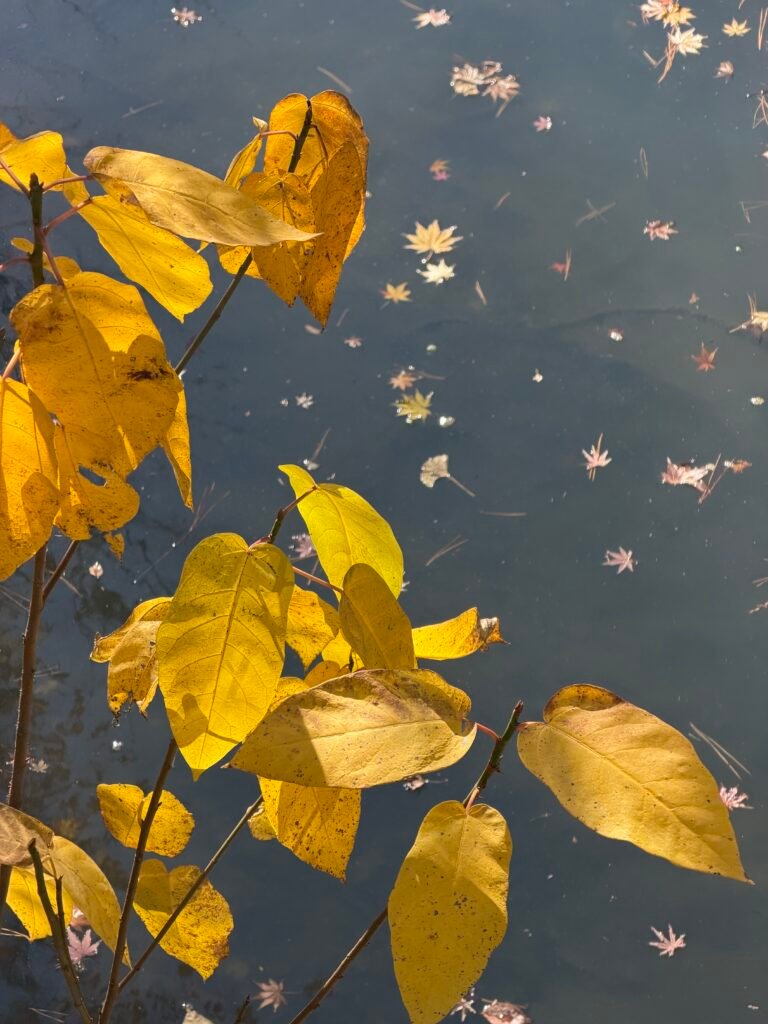
Everything looks like it is exactly where it should be: the trees and shrubs hugging a central pond; the wooden bridges connecting one part of the garden to another; the open-air tea house facing the water. Even fallen leaves cut a pretty scene on our walking path, dusting otherwise gray stretches with flecks of yellow.
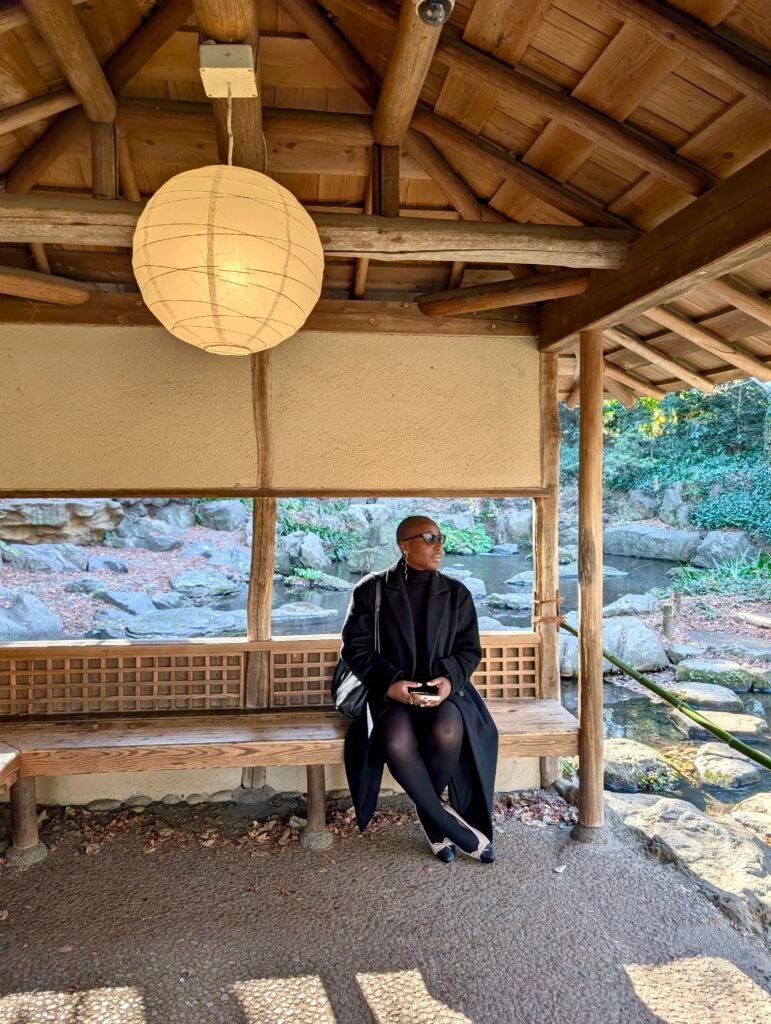
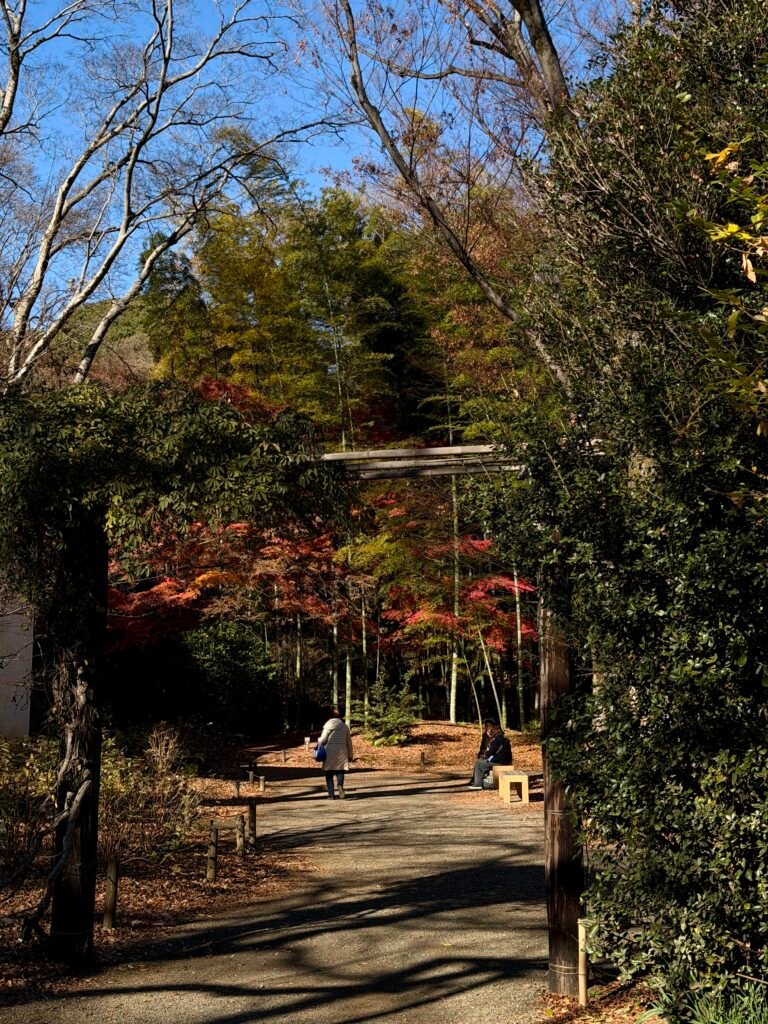
On a warmer day, I would have lingered much longer, letting time pass between the pages of a book, or winding conversation, or the haze of a daydream.
Nakamise-dori & Senso-ji Temple
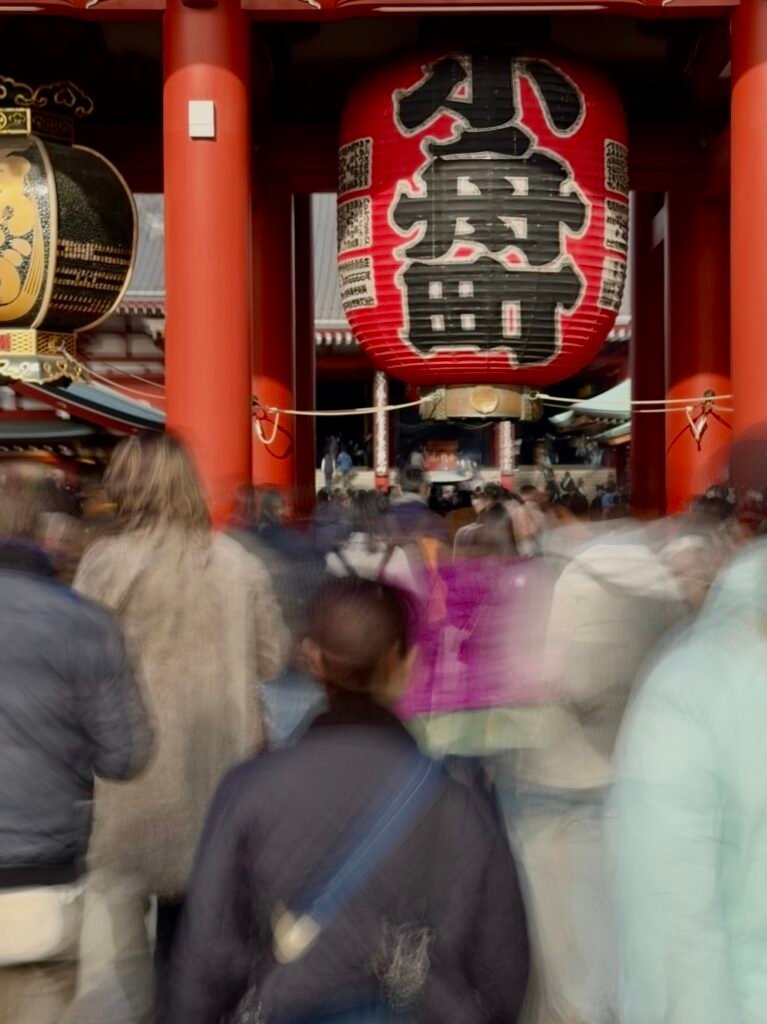
A stroll through busy Nakamise-dori brings us to Senso-ji–one of Tokyo’s oldest temples. The main building sits in the middle of a courtyard, with smaller structures surrounding it, all painted primarily in bright red, with black, gold, and pale green accents.
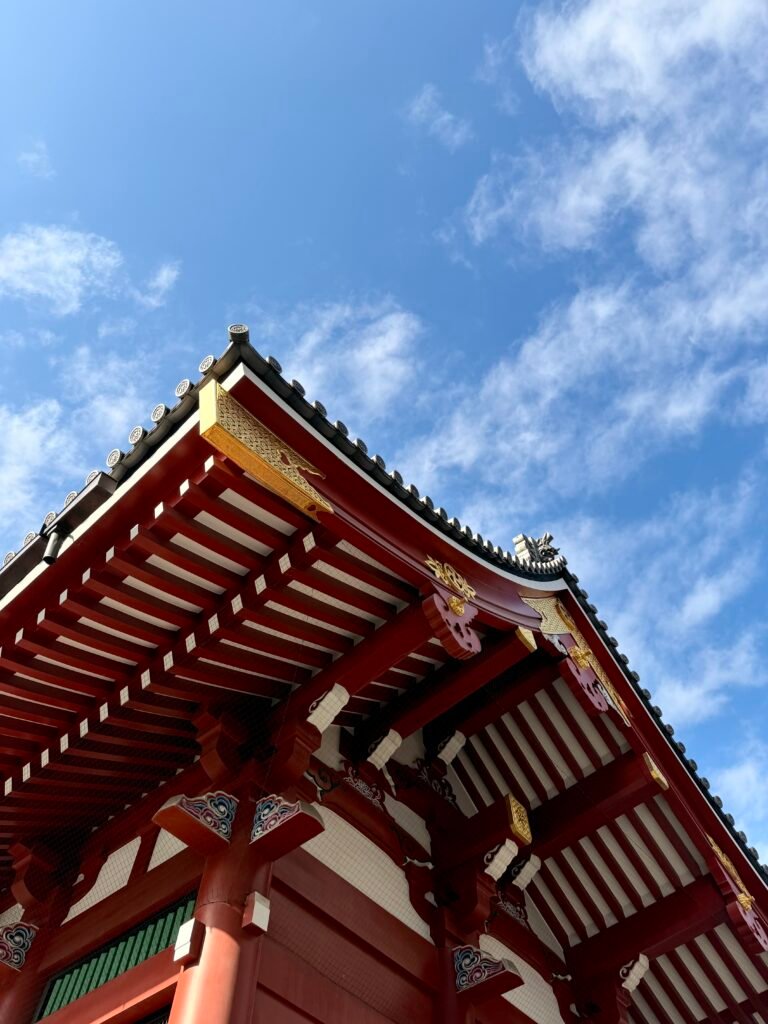
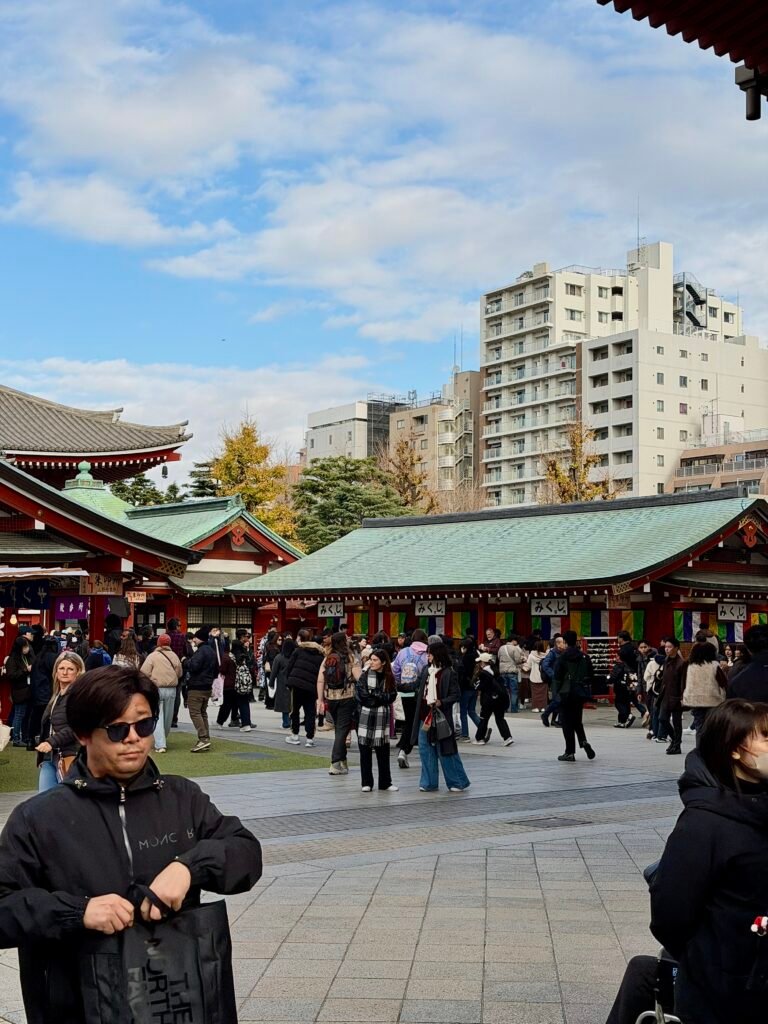
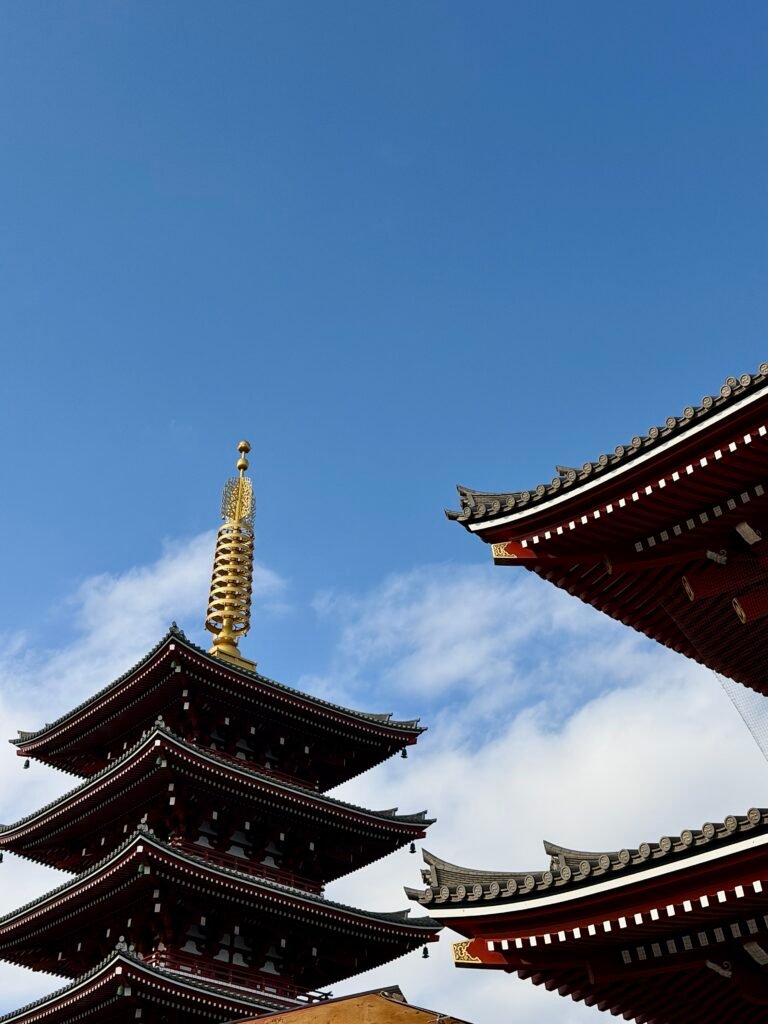
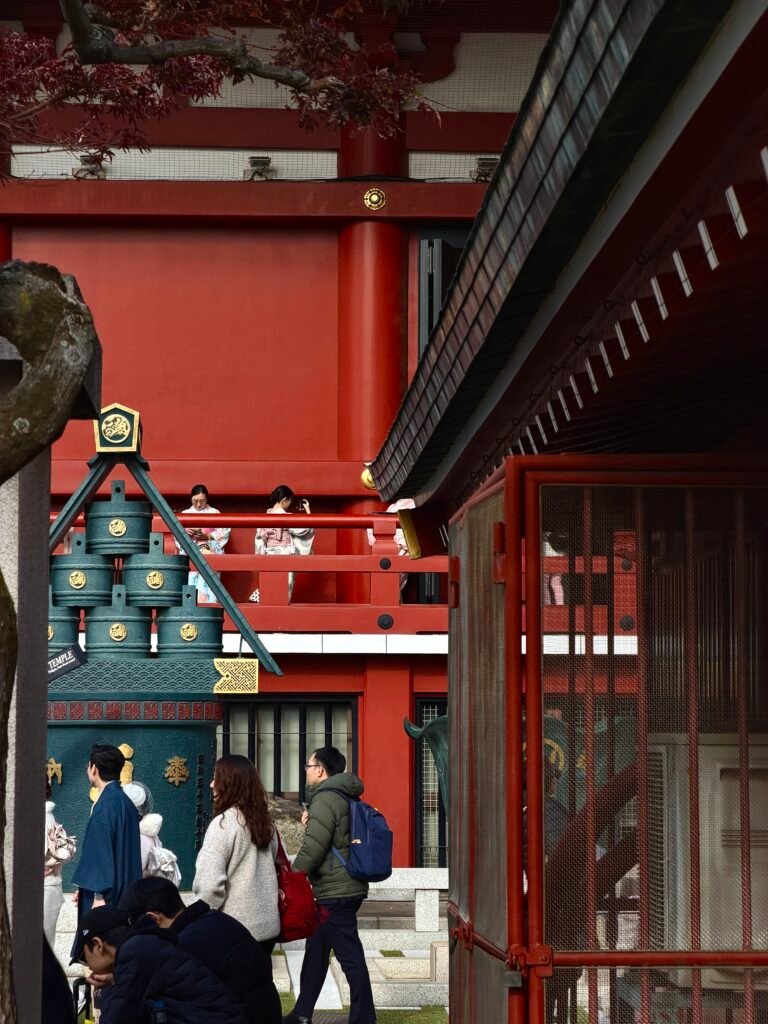
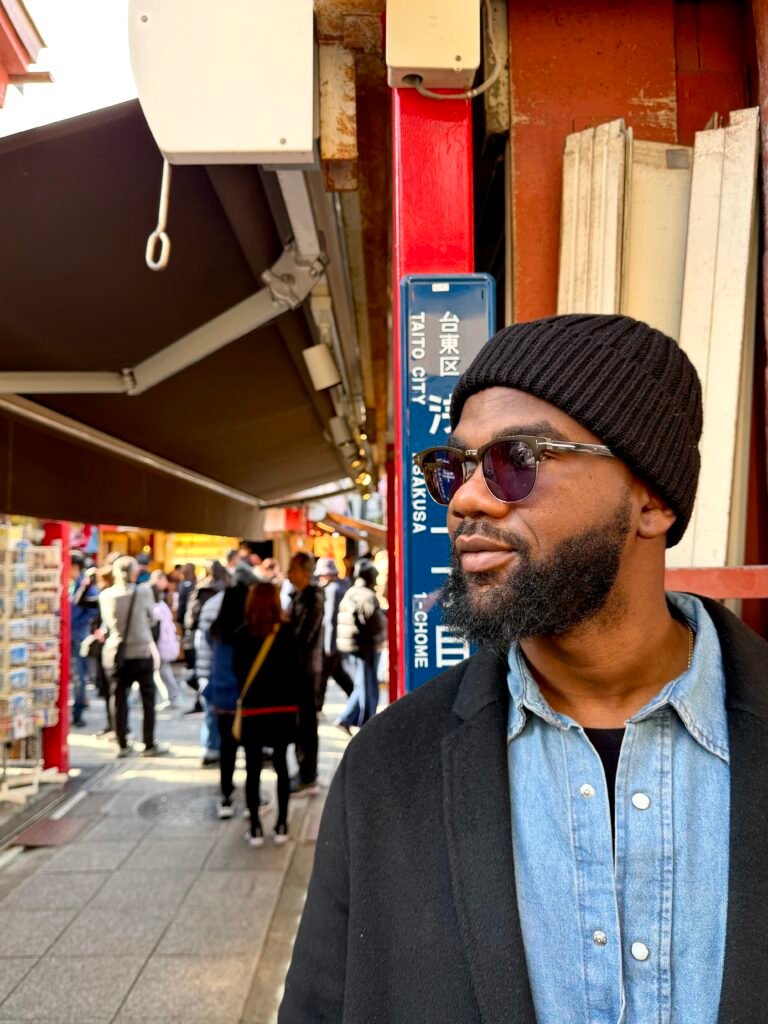
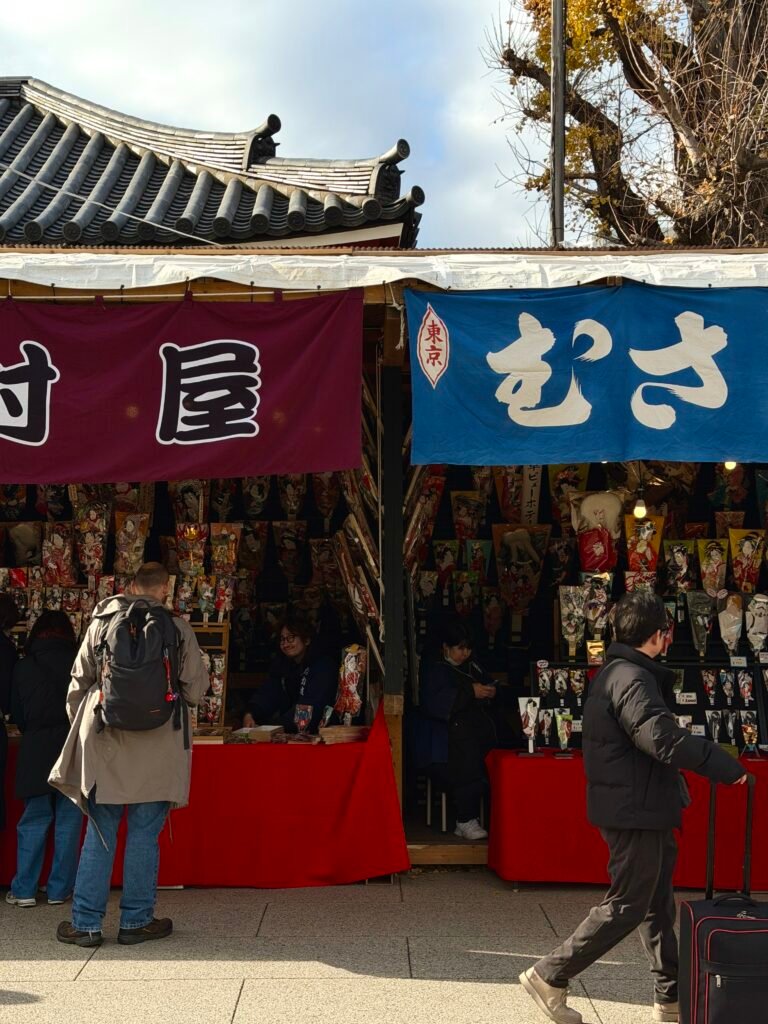
We avoid the crowds in front of the main hall, sticking instead to the somewhat quieter corners near the smaller buildings. Here, we take our own photos against the temple’s striking facade and people-watch as tourists clad in floral kimonos and wooden sandals pose in colorful groups.
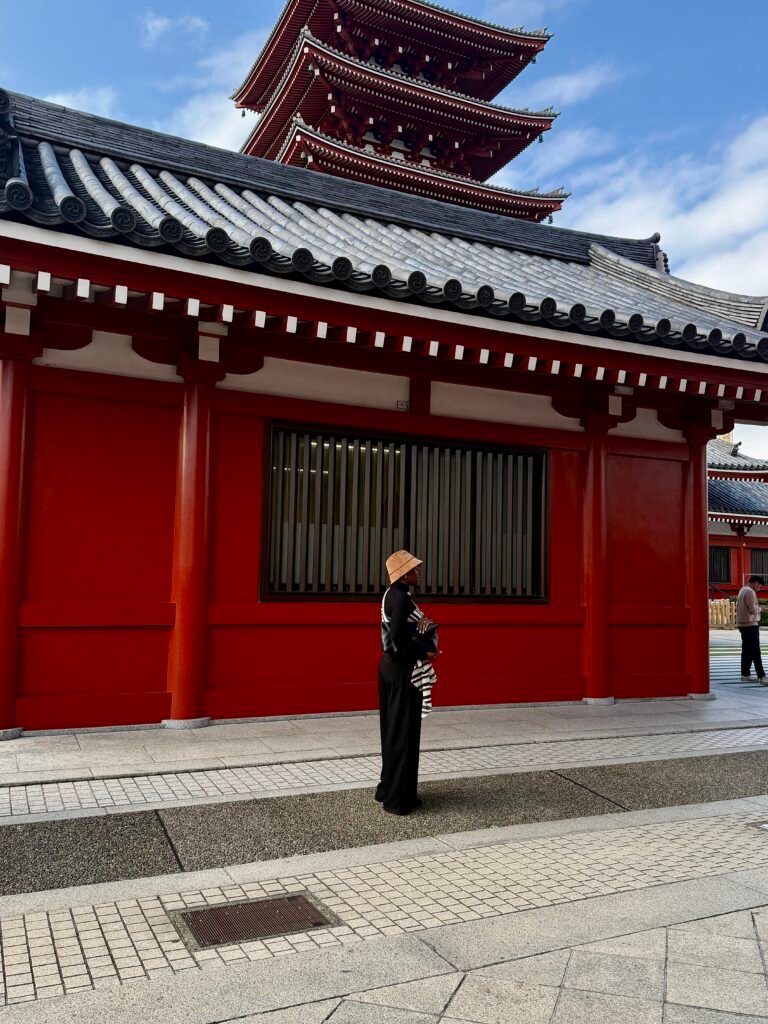
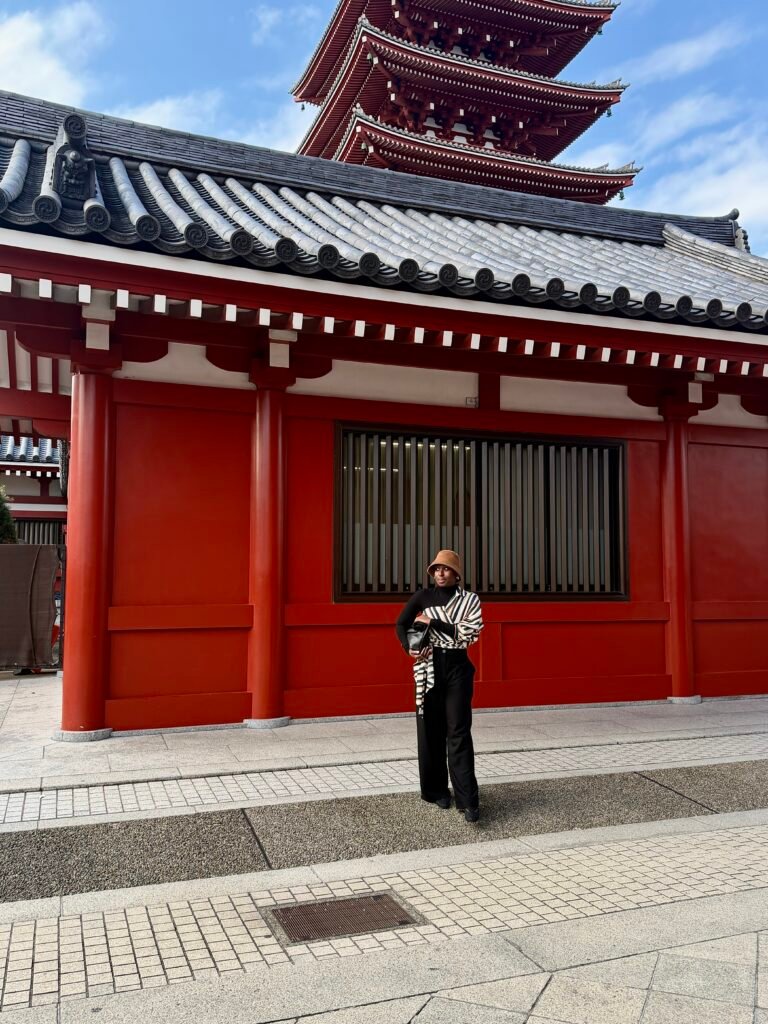
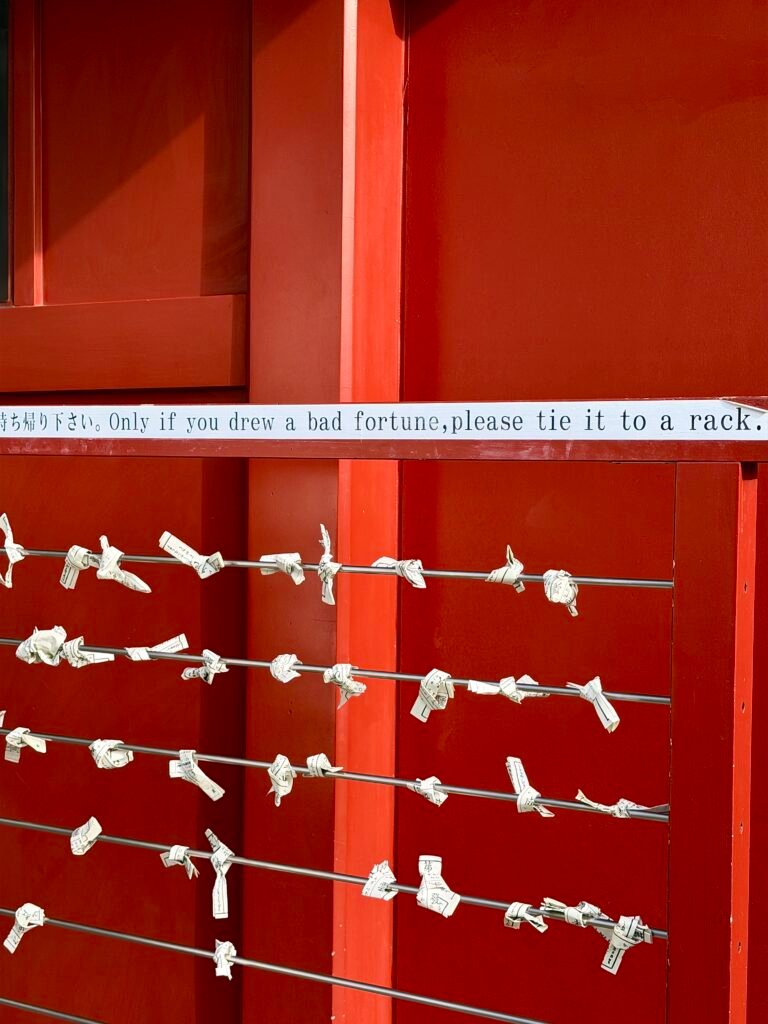
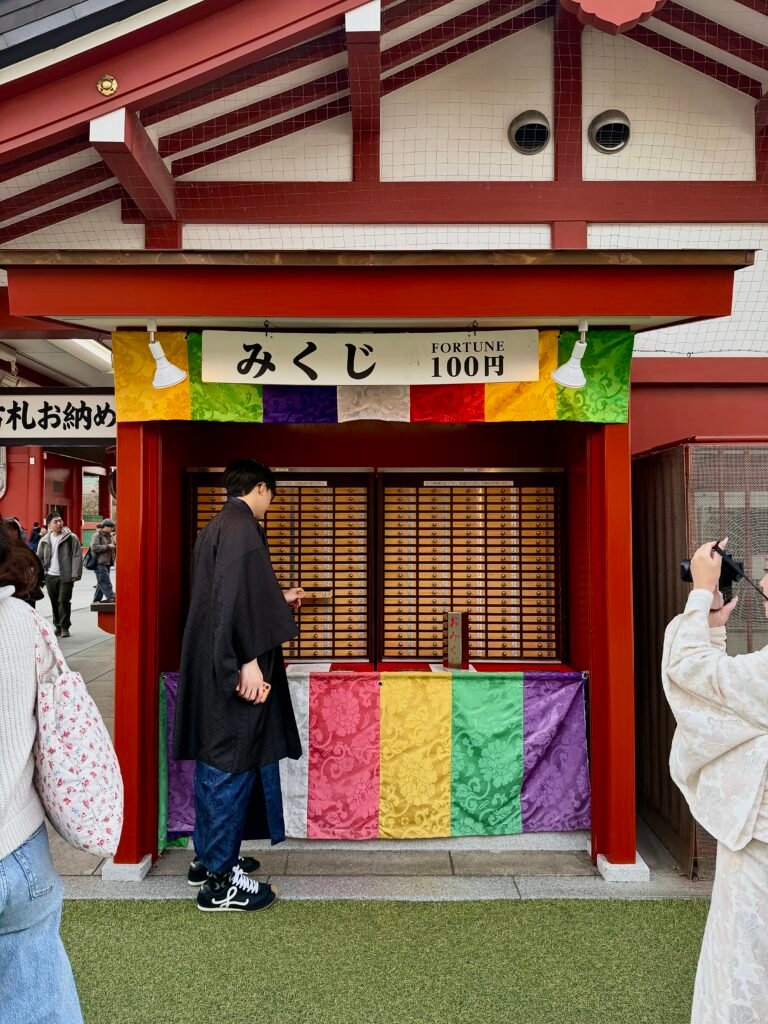
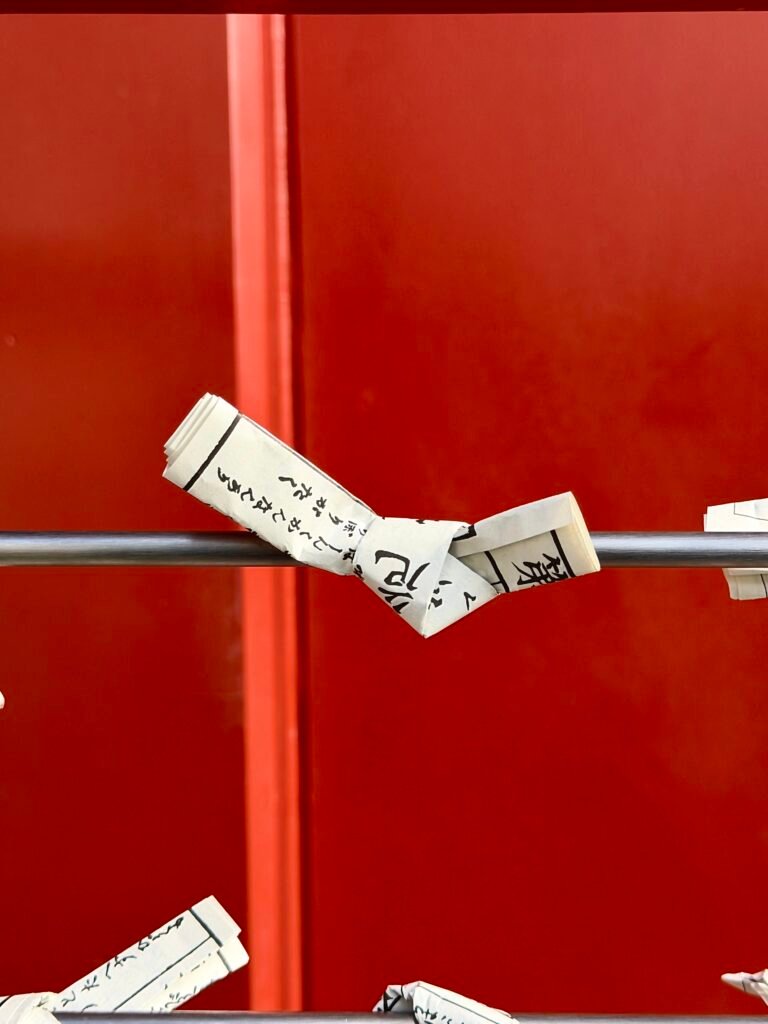
In one of these corners, I notice white slips of paper inscribed with Japanese characters tied to metal railings. The slips are omikuji [fortunes], but the ones tied off predict bad luck. When someone draws a bad fortune at the temple, they leave it there as a way of leaving the bad luck behind. I assume I wouldn’t be able to read any fortunes I pull, so I don’t draw one, but I leave wondering what my omikuji would have read; I choose to think I wouldn’t have left it behind.
Shibuya Sky
It’s thrilling to look out over a city from a point that feels so close to the sky. It’s not a perspective afforded to me every day, so even though our reserved time slot is after dark, instead of at sunset as I would have liked, the view from Shibuya Sky is still breathtaking.
An outdoor escalator leads us to a sprawling observation deck at the very top of Shibuya Scramble Square. Here, surrounded by an inky, starless night, Tokyo gleams with its own constellations: lights from cars and street lamps, glowing neon signs, and illuminated windows create a sparkling mosaic together.
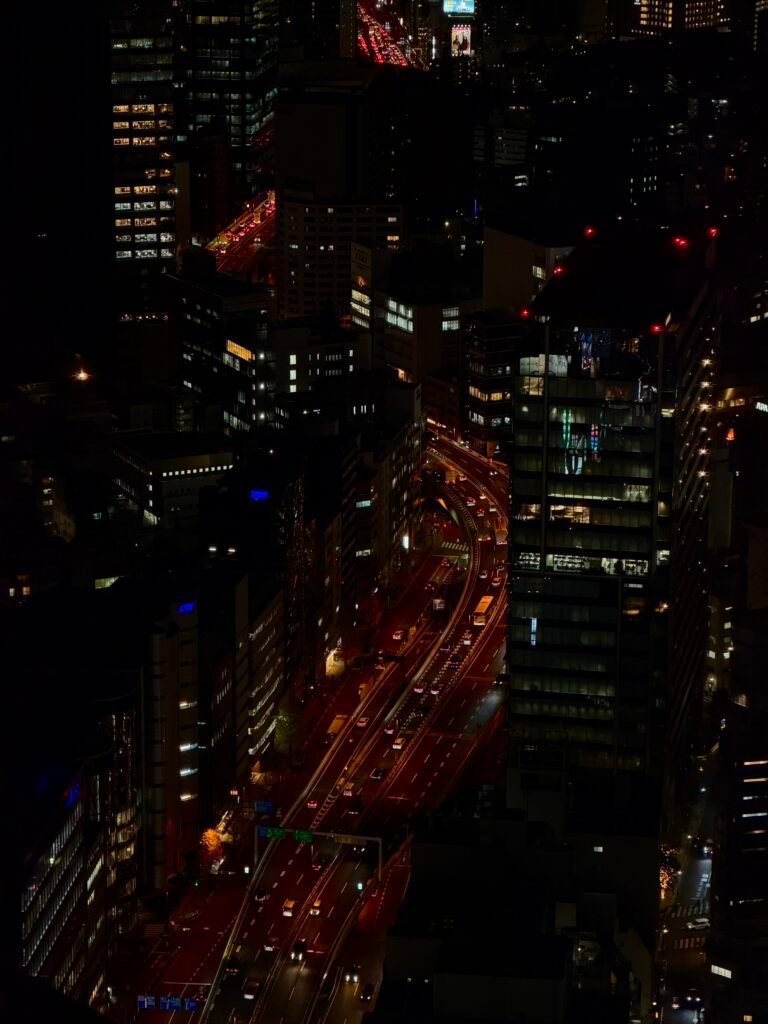
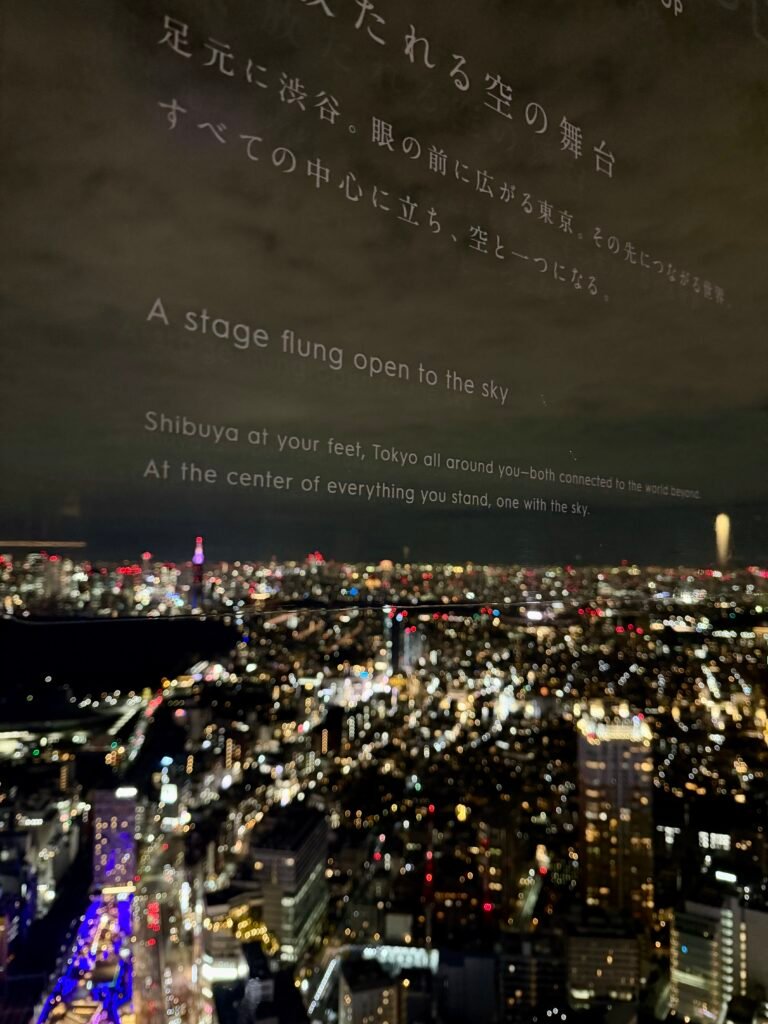
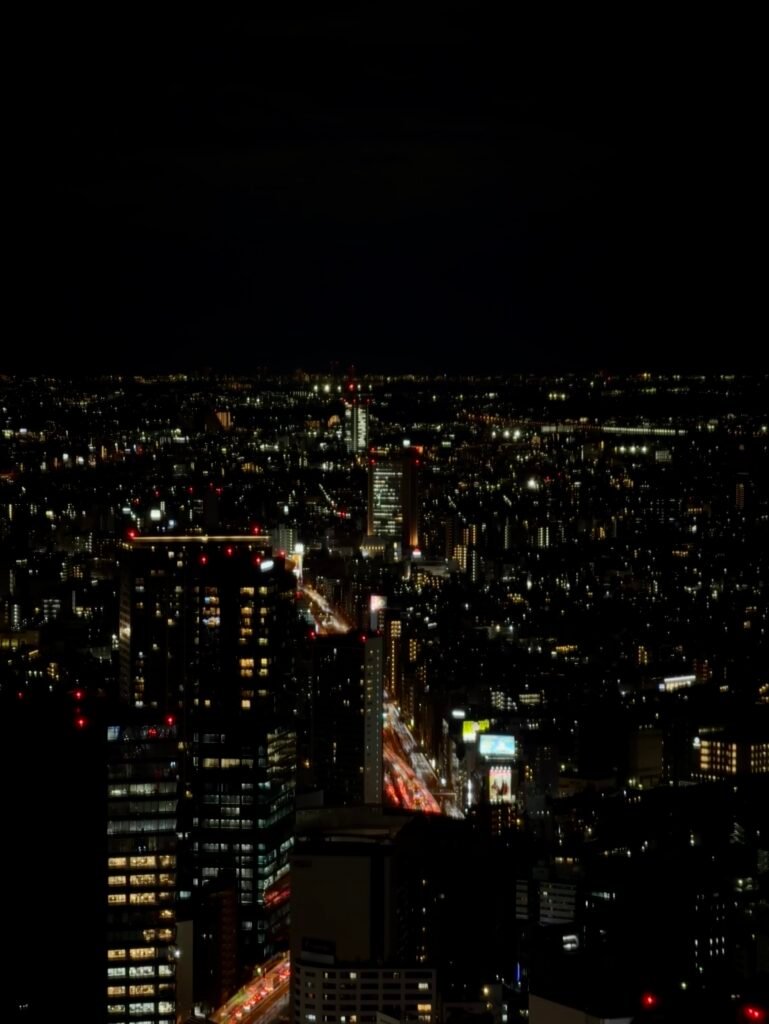
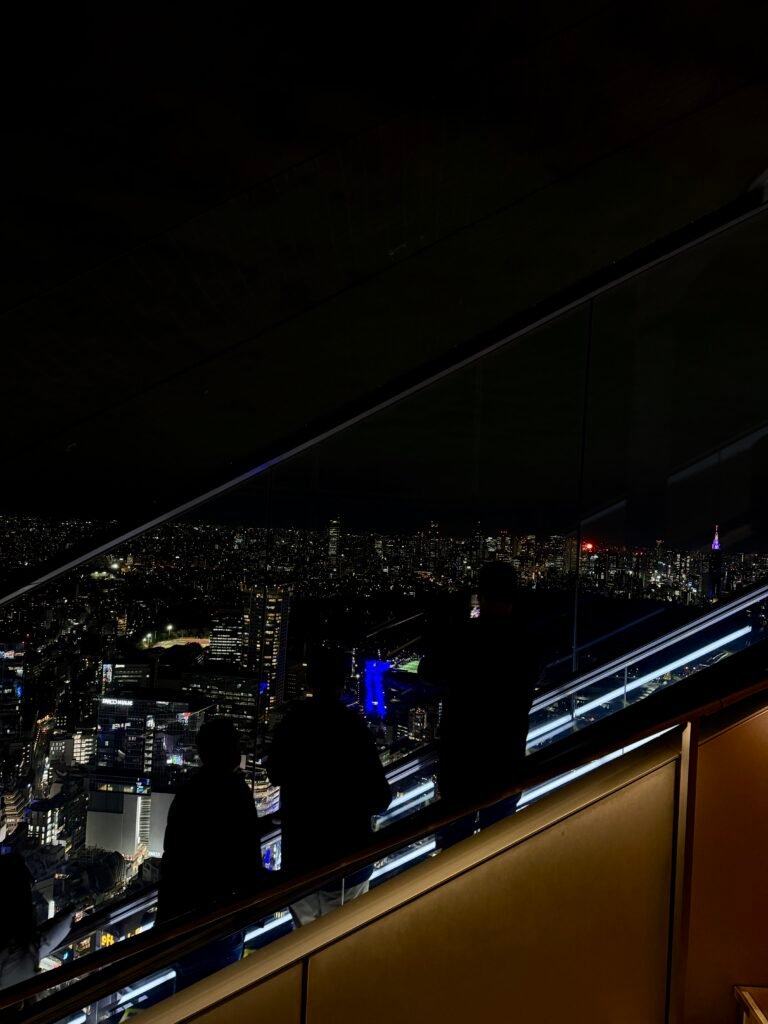
Life hums in the millions beneath us.
Eating in Tokyo
Across Tokyo, we eat as often and as generously as our appetites will allow.
There are steaming bowls of ramen and soba noodles served in flavorful broth; buttery cuts of Wagyu beef, cooked and plated in front of us; cold glasses of sake and umeshu; airy soufflé pancakes, custard-filled croissants, and honey-sweet sponge cakes.
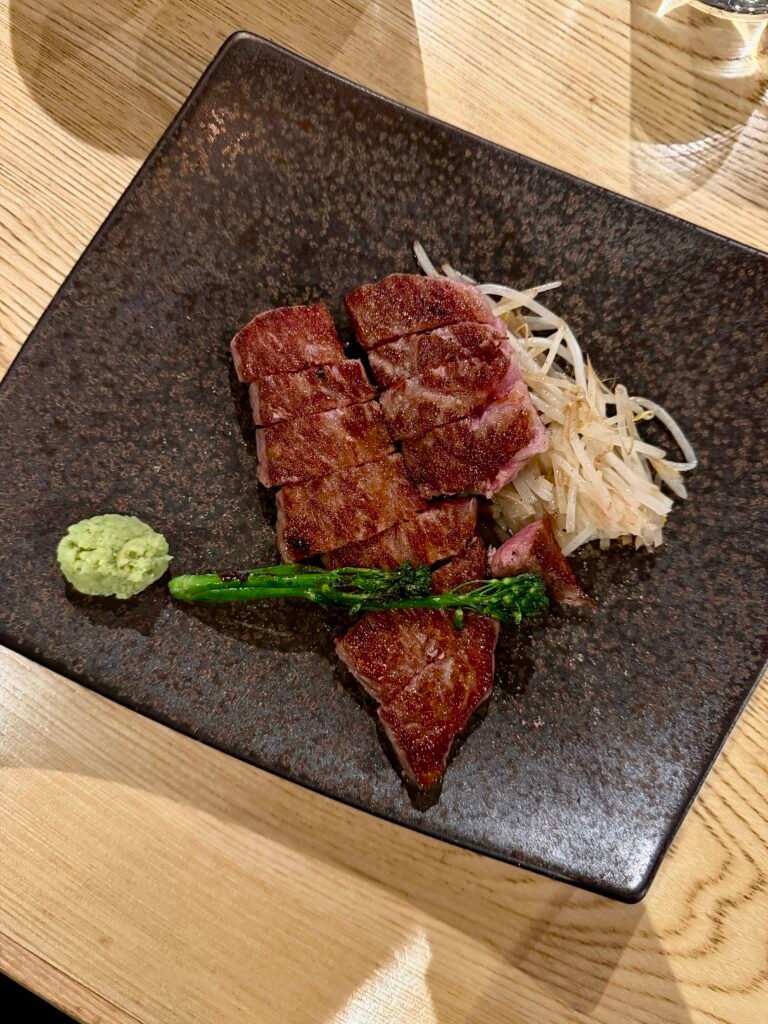
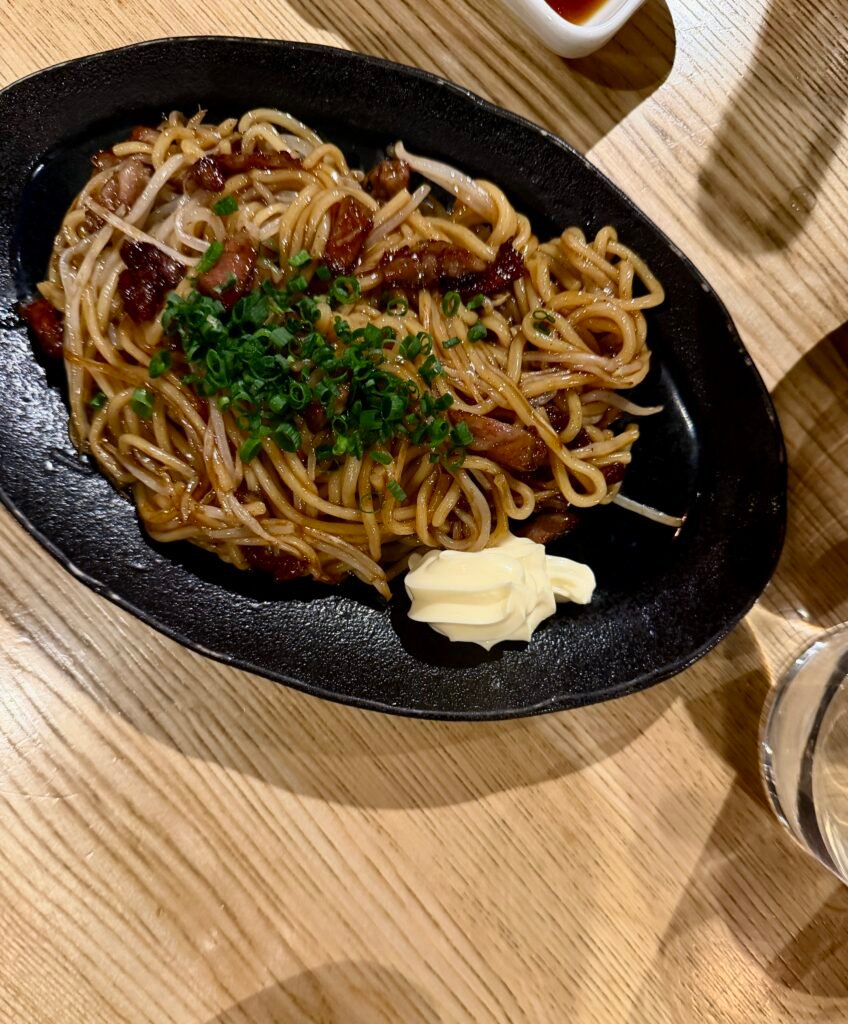
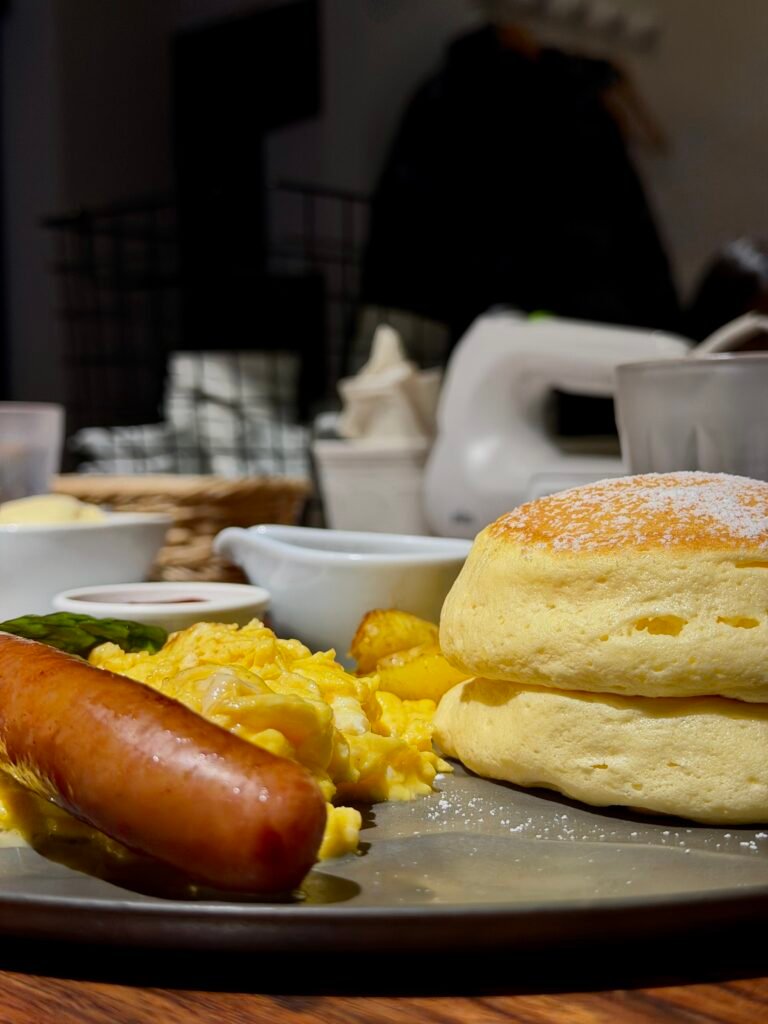
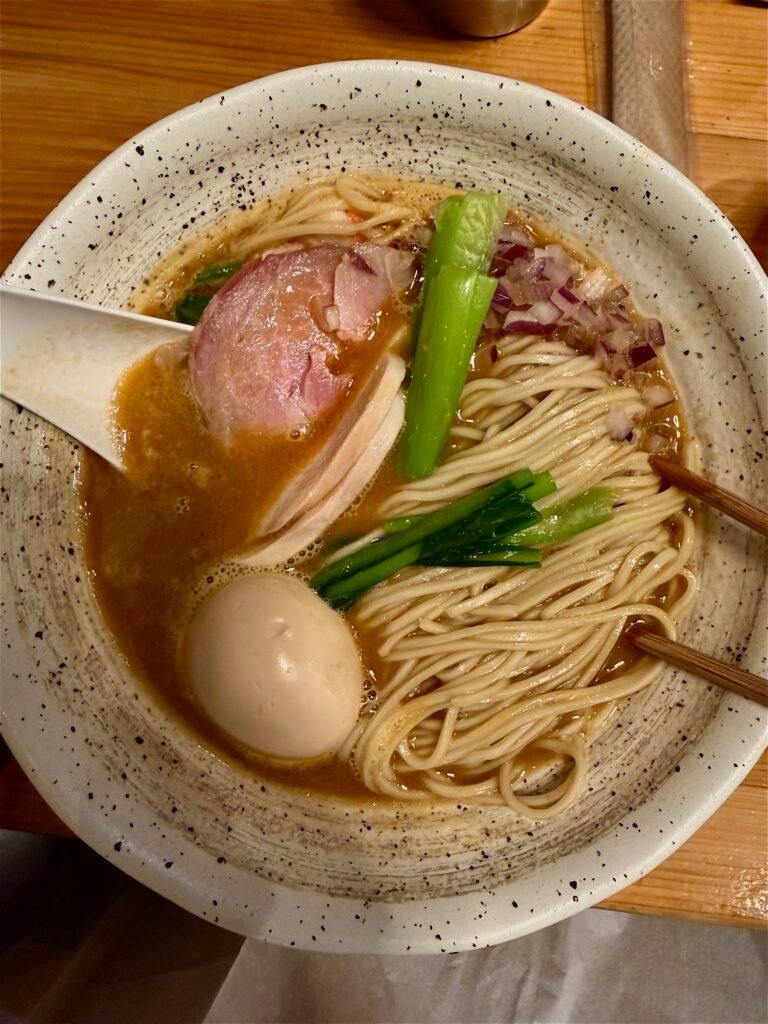
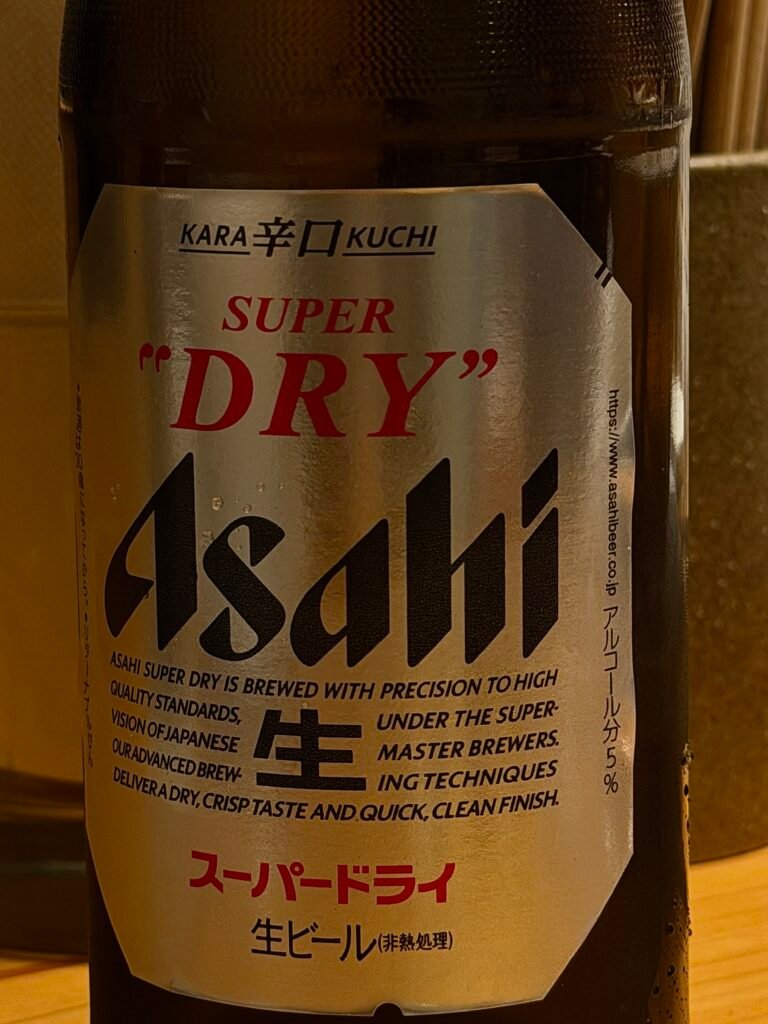
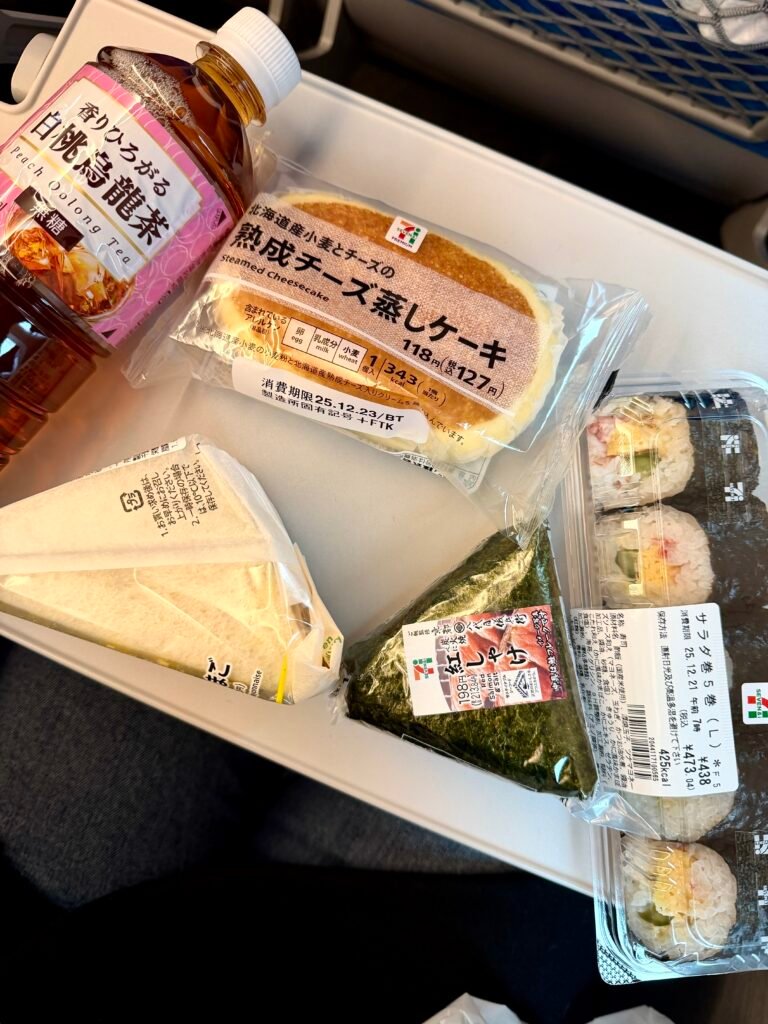
Whether it comes from a convenience store shelf or a restaurant kitchen, all of it is delicious, and I find myself excited at the thought of every meal, looking forward to what flavors will captivate me, what textures I’ll savor, and what stories I’ll remember about Tokyo through its food.
“Kanpai” with Dee
Dee and I met on Instagram nearly 10 years ago, and we’ve stayed connected ever since, supporting each other’s creative journeys in the ways we know how. So when we find ourselves in the same city, we make plans to catch up. This time, it’s over shabu-shabu, a Japanese hot pot meal where noodles, meats, and vegetables are cooked at your own pace in a pot of steaming broth set in the middle of the table.
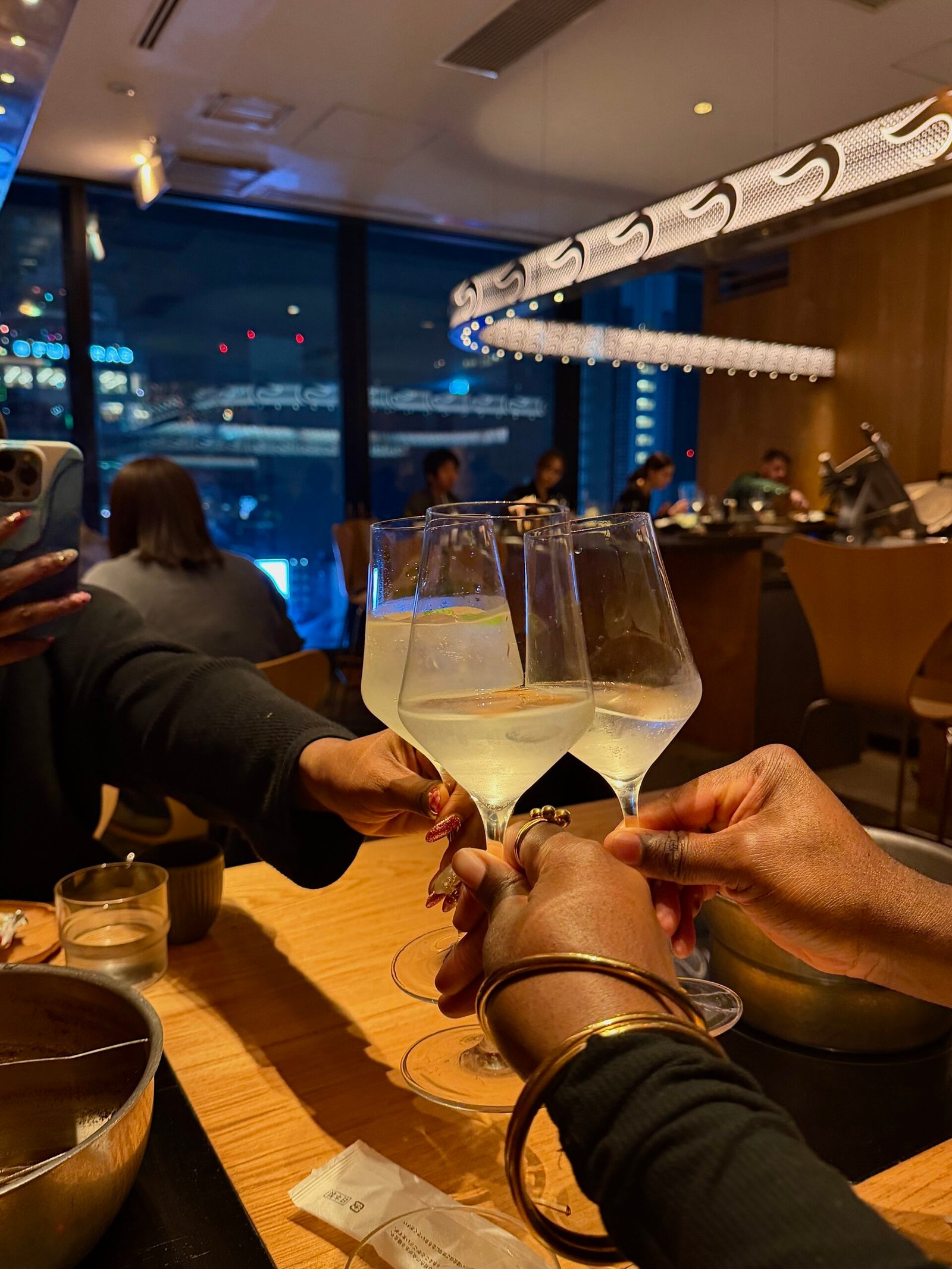
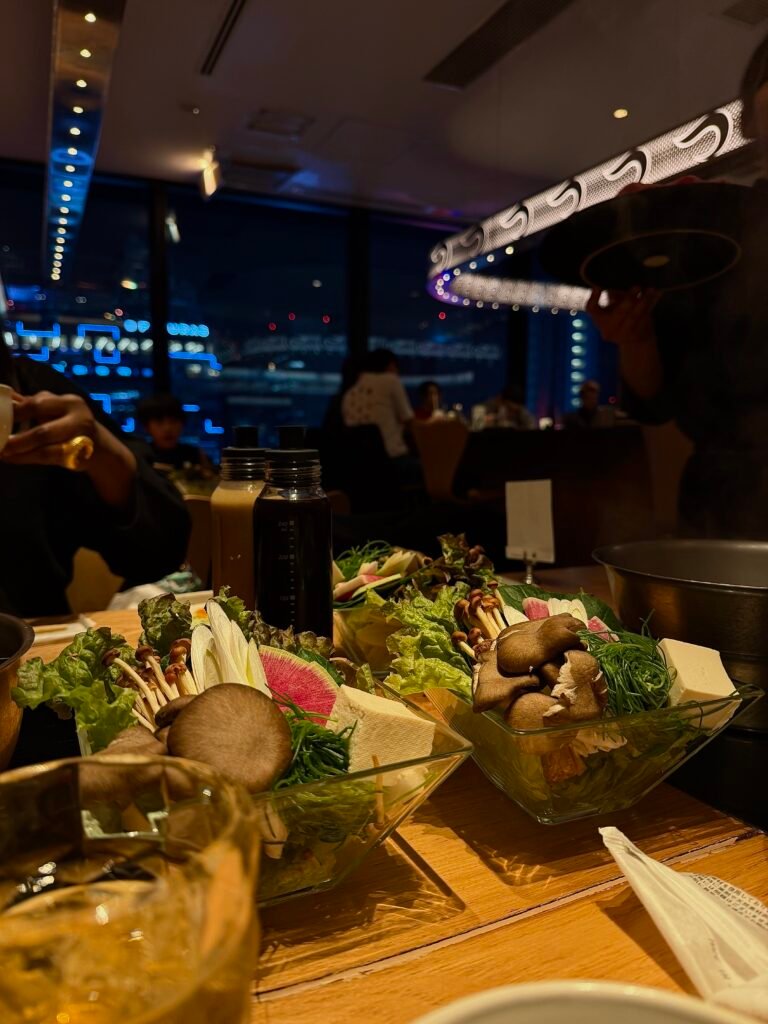
“Kanpai,” Dee teaches us, is the Japanese equivalent of “Cheers,” and we repeat it in unison, clinking long-stemmed glasses of umeshu (plum wine) across the table before our meal. Time passes over easy conversation as we trade details of each other’s lives back and forth, wandering through a mix of topics, interrupted only by the need to check that we aren’t overcooking our food.
By the time we leave, the restaurant has emptied around us.
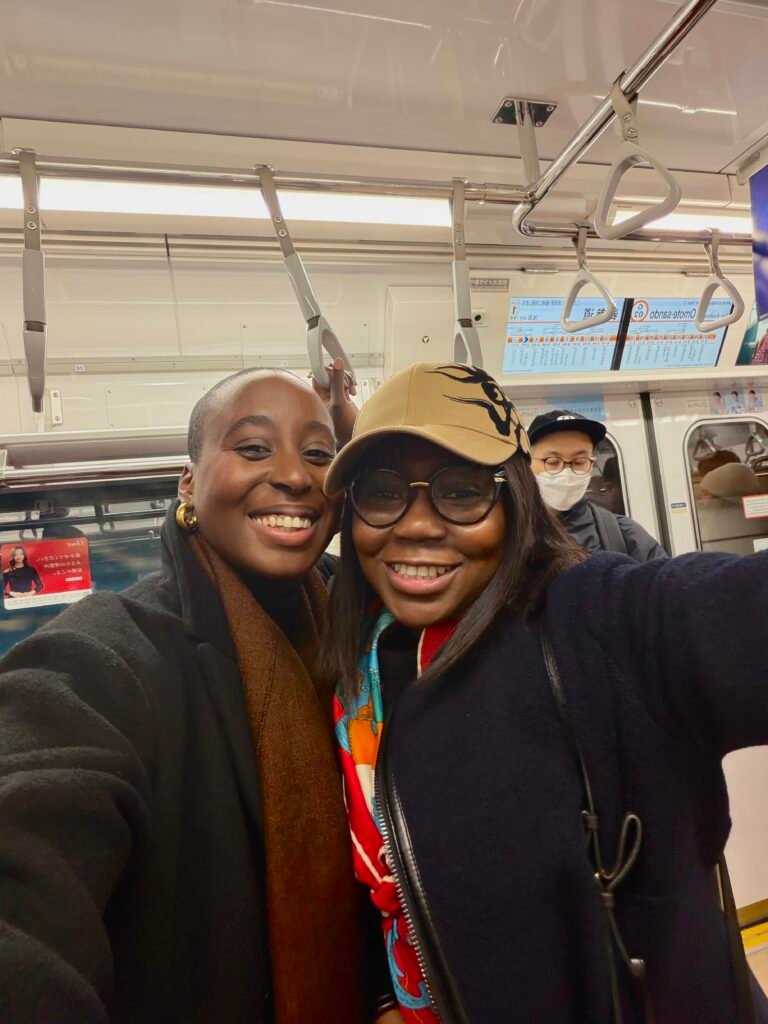
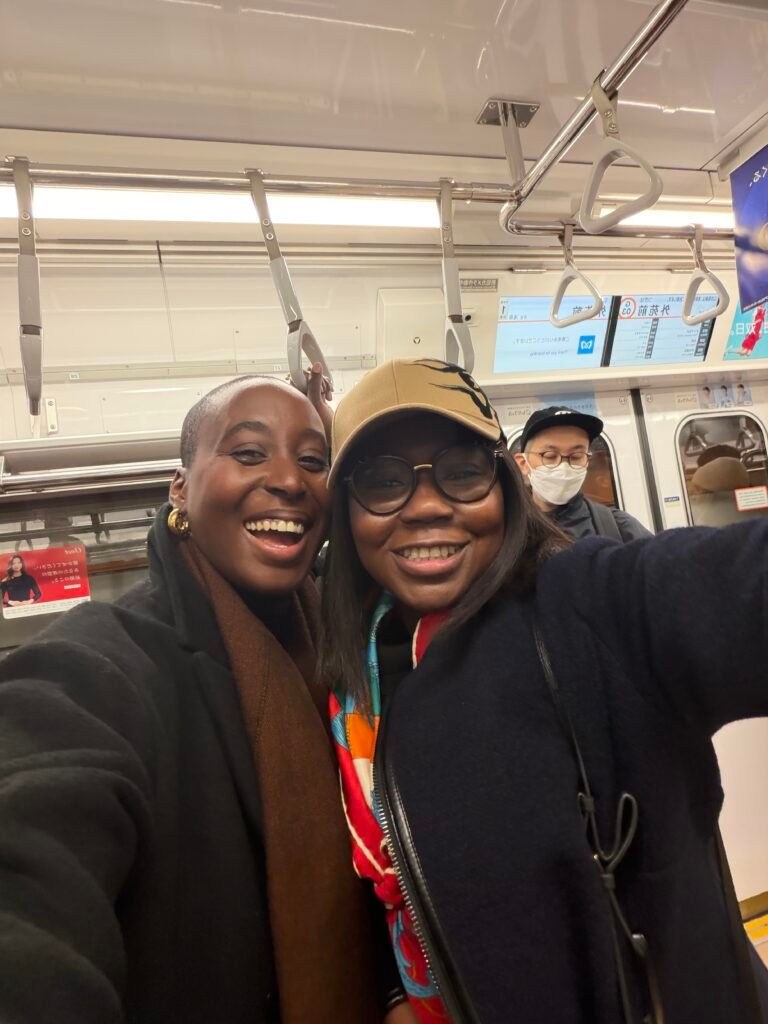
We join the crowd heading towards Shibuya Station and take the Ginza Line to our respective destinations. On the train, Dee and I take a few selfies before she gets off, marking the moment, and saying goodbyes laced with promises to see each other again somewhere else in the world.
***
On the Shinkansen, Japan’s bullet train, we speed past a cloud-covered Mount Fuji and toward Kyoto, the city I am most looking forward to experiencing.
***
Good to Know
Getting There: We flew from San Francisco to Vancouver on United Airlines, and then switched to Japanese partner Al Nippon Airways (ANA) for the flight to Tokyo Haneda. On the way back, we flew from Osaka directly to San Francisco with United Airlines.
Where we Stayed: The Royal Park GINZA, 6 Chome.
Getting Around: We used a mix of public transportation, Uber and walking. The trains are clean and unbelievably quiet, and navigation is accessible using Google Maps.
Accessing Public Transit: To use the transit system, we got the Welcome Suica Card. This is available at the airport, and can be topped up at train stations. A physical card is needed if you have an Android phone, but a digital card can be added to the Wallet app on iPhone.
Cash or Card: We hardly used cash to pay for anything, but as a general travel rule, I try to carry cash, as I never know when it might be necessary.
Where We Ate:
1)Park Stand Tokyo 2)Ginza Cafe Hanon 3)Aoyama Flower Market Teahouse
4)Kyoto Ramen Morry 5)Teppanyaki Sumifuji 6)Tsukuda Shabu Shabu
7)Ginza Noodles Clam Ramen 8) KOISAN Bakery
Apps I Found Helpful:
TableLog: We hardly made advance reservations for meals, but when we did, we used TableLog.
Klook: We used Klook to book our tickets for Shibuya Sky. The slots for sunset sell out quickly; I learned this the hard way.
Google Maps: For navigating streets and public transit routes.
Google Gemini: For planning our day-to-day itinerary. We prepared an itinerary ahead of time, but we often had to make changes on the fly due to jet lag, changed interests, new information, etc. Gemini was helpful for quickly and efficiently restructuring our plans.
Based on my experience, these are a few things I think you should know before you go, but I admittedly do not write trip planning posts. Two of my travel writer friends do, and they have extensive blog posts to help you plan a trip. One of them is Dee and she lived in Japan for 3 years! Check out their respective blogs here: 30 Things to Know Before Visiting Japan; Japan Travel Guide
As always,
Thank you for reading!
Same Footprints, Different Sands
Discover more from Same Footprints
Subscribe to get the latest posts sent to your email.